
Archaeological industrial sites
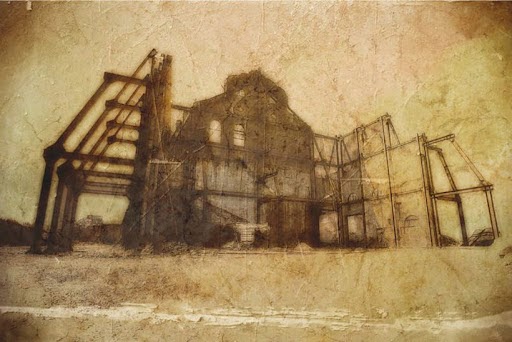
The archaeo-industrial sites are the true heart of the Ecomuseum: they are what remains of the artisanal and later industrial activity on which, for many centuries, a substantial part of the economy of the village and of the entiredistrict was based.
The first documented news of Visone mining activity dates back to 1549, when the Community, gathered in the Church of Santa Maria delle Grazie, decided on the construction of one or more lime kilns.
Some sites, worked until a few decades ago or still in operation today, show clear signs of quarrying and preserve significant remains of the industrial structures directly or indirectly connected with mineral processing.
Of other, older sites, almost only traces remain in documents or publications from past eras: of these, it is unfortunately sometimes only possible to vaguely establish their original location, thanks to a few scant toponymic references or the historical memory of the elders, but they nevertheless represent an important reference for the socio-anthropological reconstruction and preservation of the entire ecomuseum heritage.
1 – Villeto quarry
2 – Mugnachin quarry
3 – Canepa-Zanoletti quarry and kiln
4 – Predella quarry
5 – cava Pranzisa
6 – old Delorenzi-Bonello-Perazzo quarry and the kilns district
8 – old Rossi quarry
11 – Cassan-Groppi kiln
12 – ancient quarry of Santa Croce
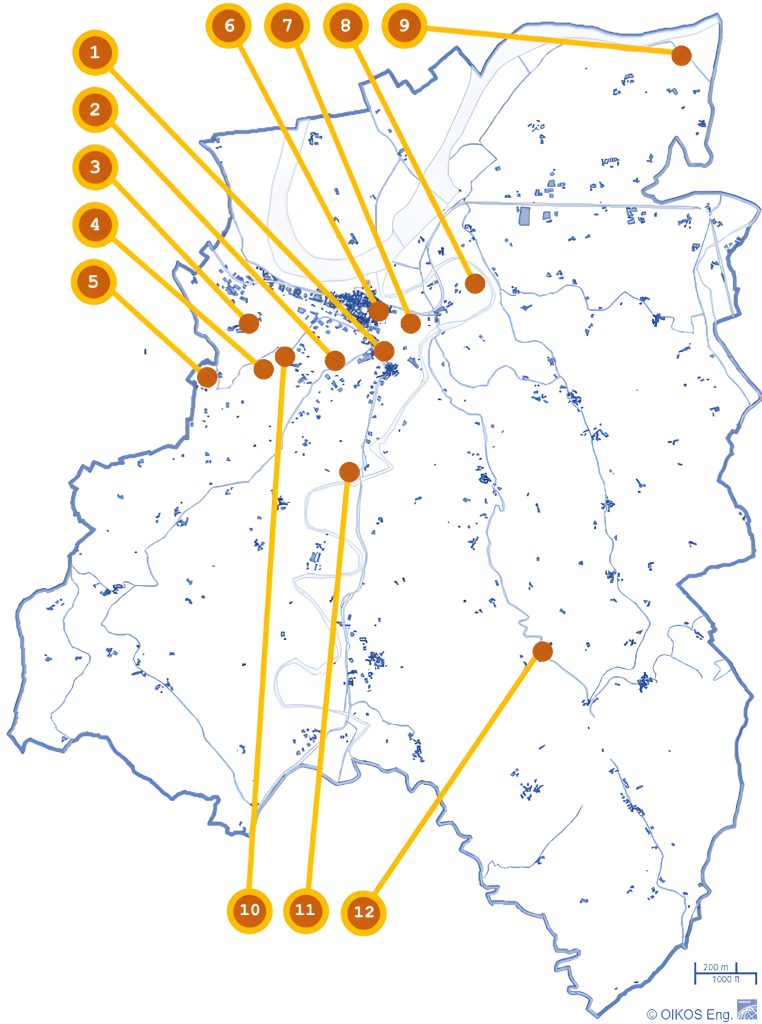
Furthermore, in the vicinity:
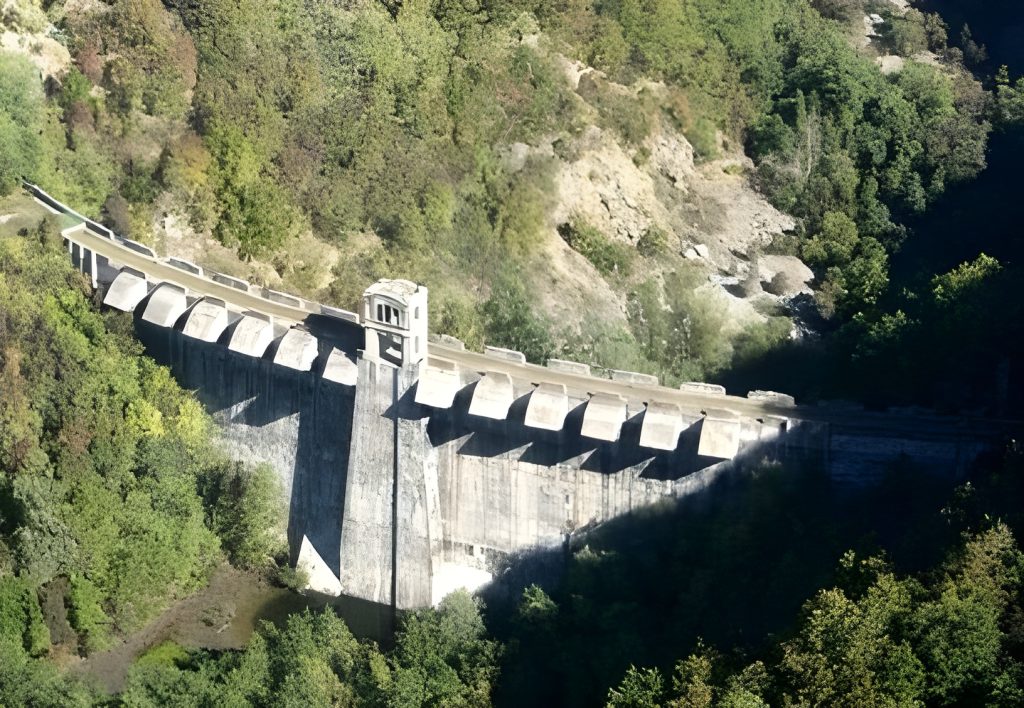
Where: Molare (AL)
The Molare dam was built between 1917 and 1925 to harness the waters of the Orba stream for the purpose of generating electricity, thus creating the artificial lake of Ortiglieto.The heavy rainfall in the area on 13 August 1935 first caused Lake Ortiglieto to overflow and then, following the collapse of the secondary dam at Sella Zerbino, a wave of water and mud exceeding 30 million cubic metres swept through the towns of Molare, Ovada, Silvano d’Orba, Capriata d’Orba and Predosa, causing 11 deaths and countless displaced people.Currently, the main dam, which fortunately withstood the flood waves, is unused and the dimensions of the Ortiglieto lake have been significantly reduced compared to the original.
The dam and the Bric Zerbino area They are in an uninhabited, rugged, and in some parts dangerous area, where mobile phones rarely get a signal. For all those who wish to go there, extreme caution and good sense are recommended. The local paths are not marked.
For more information and useful materials, please visit the website www.molare.net ↗.