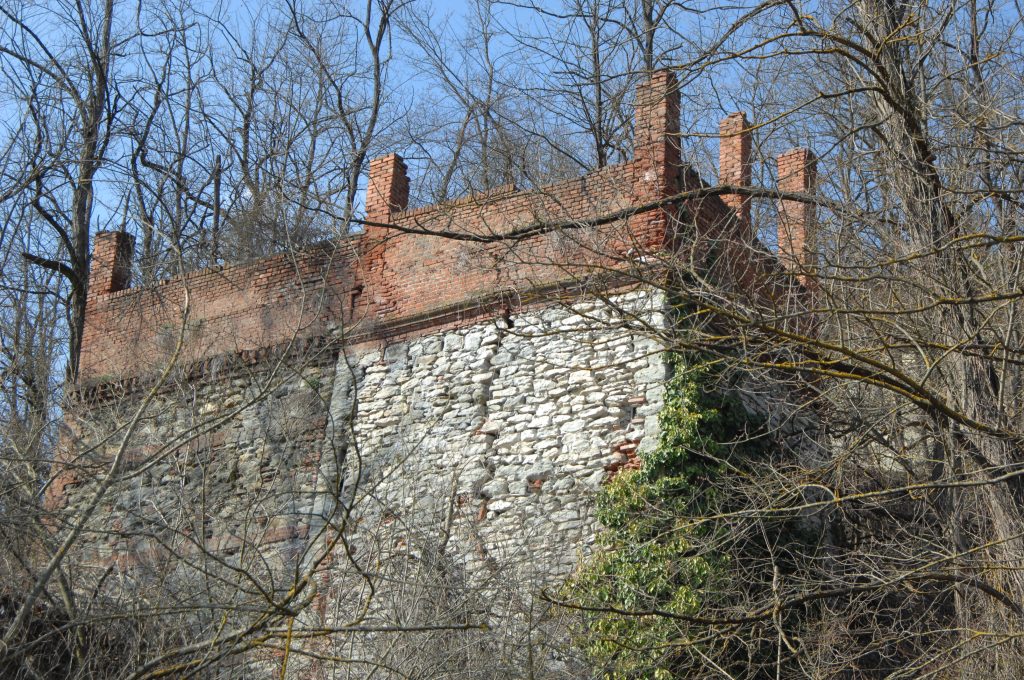
Ecomuseum of Stone and Lime of Visone
What is an Ecomuseum?

The Ecomuseum of Stone and Lime of Visone is part of the Network of Ecomuseums of the Piedmont Region. The project was created with the aim of promoting the limestone quarries spread throughout the area and the associated former industrial sites for lime processing, the long tradition of stone working, documented since Roman times, but also the intangible heritage, made up of popular and artistic culture.
Proposed by the Visone and Caramagna Valleys Association based on research for a university thesis in 2002, it is managed by the Municipality of Visone.
The Ecomuseum differs from a traditional museum because its focus is not just on a collection, but on the territory as a whole, representative of an identity with which the population identifies.
“The Region recognises and promotes ecomuseums within its territory as cultural instruments of general interest and social utility, oriented towards sustainable local development, aimed at recovering, conserving, valuing and transmitting the identity-related, cultural, social, environmental, material and immaterial heritage of a homogeneous territory, through the participation of local communities in all their components”.
Find out more on the Regional Ecomuseums
“Theecomuseum is a tool that a power and a population conceive, manufacture and use together. One mirror where the population looks at itself, to recognise itself, where it seeks the explanation of the territory to which it is bound. An expression of time. An interpretation of space. Of privileged spaces, where one can stop or set off. A laboratory. A museum, to the extent that it contributes to safeguarding and valuing the natural and cultural heritage of the population. A school. The culture to which it refers is to be understood in the broadest possible sense. The ecomuseum is committed to making known its dignity and artistic expression, from whatever stratum of the population it may come. On diversity no limits are placed…”
(G. H. Rivière, 1971)
Find out more on the Piedmont Ecomuseum Network